

I returned from Germany yesterday after teaching a group of Ukrainian preachers over the weekend.
This weekend we were thinking about the Apostle Paul’s theology and practice of preaching. We spent most of the time reflecting on the way the letter to the Ephesians combines glorious content with magnificent style.
I love the way that Paul weaves the story of salvation throughout this letter by using the Trinity to shape his teaching. This beautifully shows how Father, Son and Spirit are involved in the work of accomplishing and applying the work of redemption in the individual, the church and the universe.
This is particularly notable in Paul’s prayers in Ephesians 1:15–23 and 3:14–21.
I remember the first time I began to think about the shape of Ephesians. It was like reading a book on prayer:
“Paul’s letter to the Ephesians consists of a two-part prayer, boxed in theology, wrapped in exhortation and wrapped in love.” (John White)
One way to see the intention of a writer or speaker is to look at how they begin and how they end. In Ephesians the beginning and the end of the letter are mirror images of each other.
The letter proper begins with the words:
“Grace and peace to you from God the Father and the Lord Jesus Christ.” (Eph 1: 2)
Paul wants grace and peace to be understood and experienced in a greater measure in our lives. These two themes are taken up again and again throughout the letter.
The importance of these twin themes is reiterated in the conclusion to the letter:
“Peace to the brothers, and love with faith from God the Father and the Lord Jesus Christ. Grace to all who love our Lord Jesus Christ with an undying love.” (Eph 6:23–24)
This is typical of Asiatic rhetoric. Having begun the discourse with talking about God’s love revealed in grace and peace that shapes the believers’ faith, Paul ends the discourse in the same manner. The final two verses bring together many key themes of the letter in a very small space.
They summarize what the grace and peace of God have accomplished in uniting Jews and Gentiles in Jesus Christ through his work on the cross. This is described in detail in Ephesians chapter 2.
Ephesians 2:1–10 speaks about how grace draws the spiritually dead and morally distracted to saving faith and transformed lives in Christ.
Ephesians 2:11–21 describes how the peace of God revealed in the reconciling work of Christ creates a multi-ethnic, multicultural church.
Paul has something to say about the church in all six chapters of Ephesians. It is the body of Christ, new man, household of God, spiritual temple, bride of Christ and army of God.
Preachers can sometimes fall into an excessive individualism in their preaching that misses the corporate dimension of Christianity stressed in the New Testament. Some of my favourite verses in Paul remind me that the church is God’s great idea to advertise the wisdom of his grace and peace:
“His intent was that now, through the church, the manifold wisdom of God should be made known to the rulers and authorities in the heavenly realms, according to his eternal purpose that he accomplished in Christ Jesus our Lord.” (Ephesians 3:10–11)
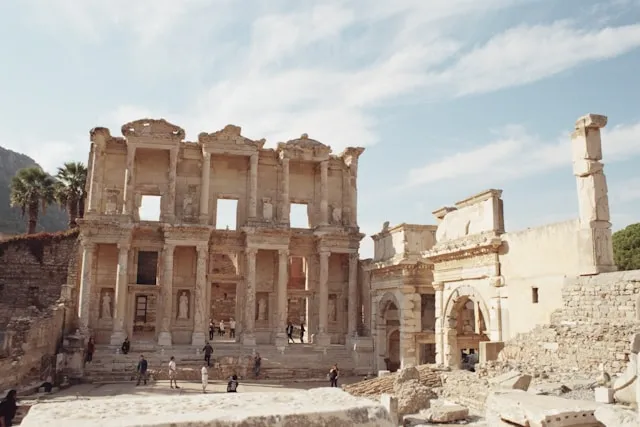
Photo by Deniz Demirci on Unsplash