

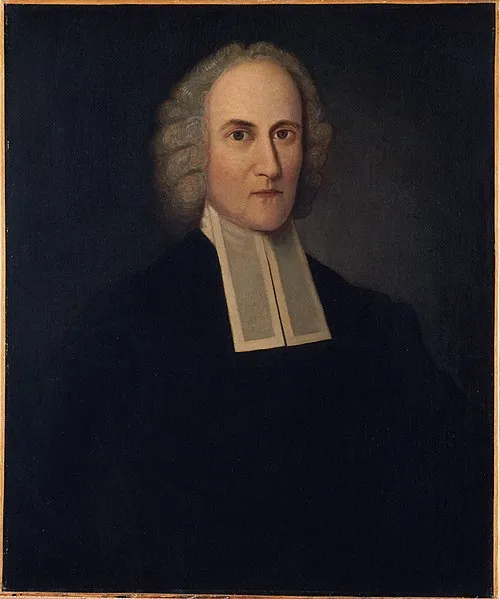
This week we had another of our Dead Preachers’ Society reading events. We looked at five sermons preached by Jonathan Edwards from The Sermons of Jonathan Edwards — A Reader.
There are two opposite reactions to the preaching heroes of the past:
The first is to that of rose-tinted nostalgia for a bygone era. Honouring people from the past can tend to be blind to the reality that the historical and cultural context of their day contributes much to the effectiveness, or otherwise, of their preaching.
For example, we looked at Edwards’ famous, some would say infamous, sermon: Sinners in the Hands of an Angry God. Although this is the one sermon by Edwards that most people have heard of, it is in fact far from representative of his overall preaching output. This is so for the following reasons:
- It was delivered in a time of spiritual awakening in New England. George Whitfield, the great British revivalist preacher, had visited Edwards’s church in Northampton and had been enthusiastically received. Most preachers have had the experience when visiting preachers come and the congregation say, “Why don’t you preach like that?” In some ways Sinners in the Hands of an Angry God is a response to that charge. It is a distinctive awakening sermon that speaks into a time of heightened spiritual awareness in New England. It is a special sermon for a special time.
- In the sermon Edwards uses over twenty images to describe the danger of falling into hell. The sermon went down like a lead balloon when it was first preached in his home church. Maybe they had heard many of those images before and had become, in Edwards words, ‘sermon proof’. Ironically, the second time Edwards preached this sermon in nearby Enfield, the reaction was completely different. In this congregation, that had a reputation for resistance to talk of revival, the sermon landed with raw and palpable power, so much so that Edwards himself, so overcome with emotion, was unable to finish the sermon!
Those who are nostalgic for a bygone era must recognise that we are in a different season. We are not in a time of heightened spiritual awakening, nor are we living at a time of biblical literacy and enthusiasm for sermons that were a feature of 18th Century New England.
The second reaction is to think that the past has nothing to teach us.
There are two things we can learn from this sermon.
- Its creativity. The sermon has been described as “a work as tight, concrete, and powerful as a well-wrought poem”. The sermon is lively, imaginative and compelling.
- Its sense of urgency. The teenage Edwards started to write seventy life resolutions. One of these said “Resolved (55): To endeavour to my utmost to act as I can imagine I would if I had already seen all the happiness of heaven, as well as the torments of hell.”
This is a stinging rebuke to the “take it or leave it” approach to preaching that lacks any passion.
Contemporary preachers might not want to adopt the style, tone and language of Edwards but we could do with learning from his creativity and urgency.