

I didn’t really enjoy very much about high school, but I do remember a handful of books that captured my imagination.
One of these was William Golding’s Lord of the Flies, written in 1961. The story concerns a group of boys around my age at the time who had been marooned on a desert island after a plane crash that killed the pilot.
I have been reminded of the powerful story told by the book as I have been watching the most recent television adaptation.
In the next three blogs I want to try and explore three themes that struck me about this brilliantly directed and filmed retelling of Golding’s atmospheric novel. These are:
Evil,
Nature and nurture, and
The power of storytelling.
The first theme is evil.
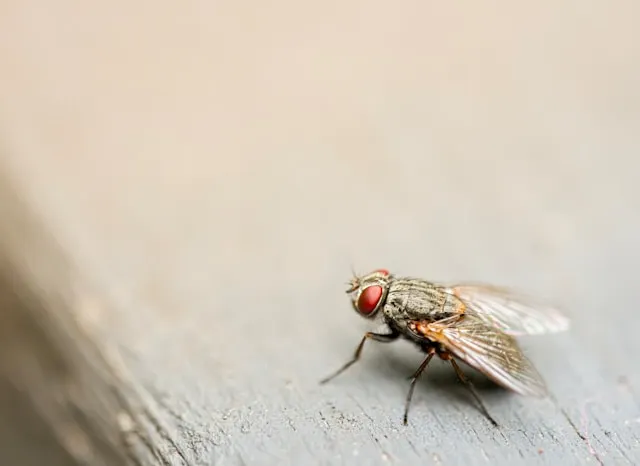
This is strongly hinted at by the title. ‘Lord of the Flies’ is a reference to the diabolical title given to Jesus by the authorities in Jerusalem. It is a title for the Devil.
If there is evil in the world, and there is, we can be sure that there is a malevolent mastermind behind this evil.
Here of course we need to be careful. There is always the response to evil that claims that “the Devil made me do it.” The Devil is the mastermind of evil in our world, but human beings are his willing accomplices!
As Martin Luther put it, “You cannot stop the birds from flying overhead, but you can stop them from nesting in your hair.”
Part of the role of a Christian preacher is to remind hearers of their own personal agency in the sin that is in the world.
I am reminded of the debate that once was carried out in The Times newspaper on the question “What is wrong with the world?”
The Catholic author GK Chesterton, famous for his book Orthodoxy and for his detective stories about Father Brown, wrote,
“Dear Sir, I am.”
This terse witticism hits the nail on the head. Sin is not something that only other people do, it is something at we all do.
“All have sinned and fall short of the glory of God” (Romans 3:23).
The story that William Golding tells in Lord of the Flies is a downward spiral into chaos that unfolds when a group of mostly public schoolboys are left to their own devices without any adult supervision.
Civilisation is a thin crust on a gigantic pie dish that can easily crack and allow the boiling hot contents to spill out and cause all kinds of damage.
That is what happened on the island. It is a graphic picture of what can happen when original sin has no inner or outer constraints.
Three of the boys try to alert the others to the importance of having some kind of code of behaviour, but the response is to ignore their pleas and then seek to silence their voices.
Like the driver who sees a red warning light on the dashboard, at first it is ignored — then it is coved up with sticky tape, and lastly it is smacked out with a hammer.
It is what Paul describes as ‘holding down’ (suppressing) the truth in unrighteousness. (Romans 1:18)
How do preachers speak with integrity and sensitivity about sin?
More next week.
Photo by Jin Yeong Kim on Unsplash